
Teaching a new generation about America’s founding is an exercise in hope
Educators and students from across the state reflect on what they’ve learned about the American Revolution.

By Alyssa Rosenberg
”America is always said to be coming of age, or about to,” Yale University historian C. Vann Woodward wrote in The New York Times on Dec.ember 29, 1976, looking back on the bicentennial year. For him “resistance to growing up was part of the trouble” the country faced. An attachment to the myth of American innocence prevented its citizens from reckoning with the agonies of the Vietnam War and the humiliation of Richard Nixon’s resignation.
But there are advantages to what Woodward called “the myth of America as the land of youth, always seeking renewal, a new greening, the eternal Peter Pan among nations.” Each new generation of Americans brings fresh interpretations to our founding stories and encounters our founding documents with expectations undiminished by disappointment. Woodward criticized people for blinding themselves to the gap between America’s myths and their contemporary reality. A more hopeful way to view that chasm is as a measure of America’s ambition.
Fifty years later, the country has reached another anniversary of the founding, this one marked in some quarters by self-doubt about America as a grand national project and in others by a defiant reaffirmation of American greatness that brooks no qualification. To make sense of the moment, I reached out to teachers from across the state, starting with those who had been recognized by the Gilder Lehrman Institute of American History as Massachusetts History Teachers of the Year. Some of them referred me to other teachers, and the result was a mix of responses from both teachers and students in small towns and bigger ones, from public, Catholic, and charter schools, from middle and high schools.
I asked the youthful and adult respondents three questions, and gave the teachers the option to reflect on how they teach the Revolution: What’s the most surprising thing you’ve learned about the American Revolution? What story from the Revolutionary era helped you understand what America became in the centuries that followed? And perhaps most importantly: What event from the American Revolution gives you hope for the future?
Their written responses have been edited for length and clarity.
Teaching the Revolution
Handing students the narrative
Early in my 25-year career, I taught the standard list of names, dates, and far-off battles. However, my summer job as a Freedom Trail tour guide with Hub Town Tours shifted my perspective. I saw how standing on the actual site of the Boston Massacre electrified visitors in a way a textbook never could. I knew I couldn’t bring every student to the Freedom Trail, but I realized I could bring the Revolution to them.
My colleague Matt Merten and I started in the local archives in Mendon and Upton. We found the “Mendon Resolves‚” a 1773 document written by local leader Joseph Dorr Jr. that used the language of “unalienable rights” a full three years before Thomas Jefferson drafted the Declaration of Independence. The Resolves were a response to the “Boston Pamphlet,” circulated by Samuel Adams’ Committee of Correspondence to build Colonial unity. Adams used these local responses to prove to the Continental Congress that this was a unified political movement, not just an unruly Boston mob. The Resolves showed our students that their town wasn’t just a passenger to history, but a driver of it.
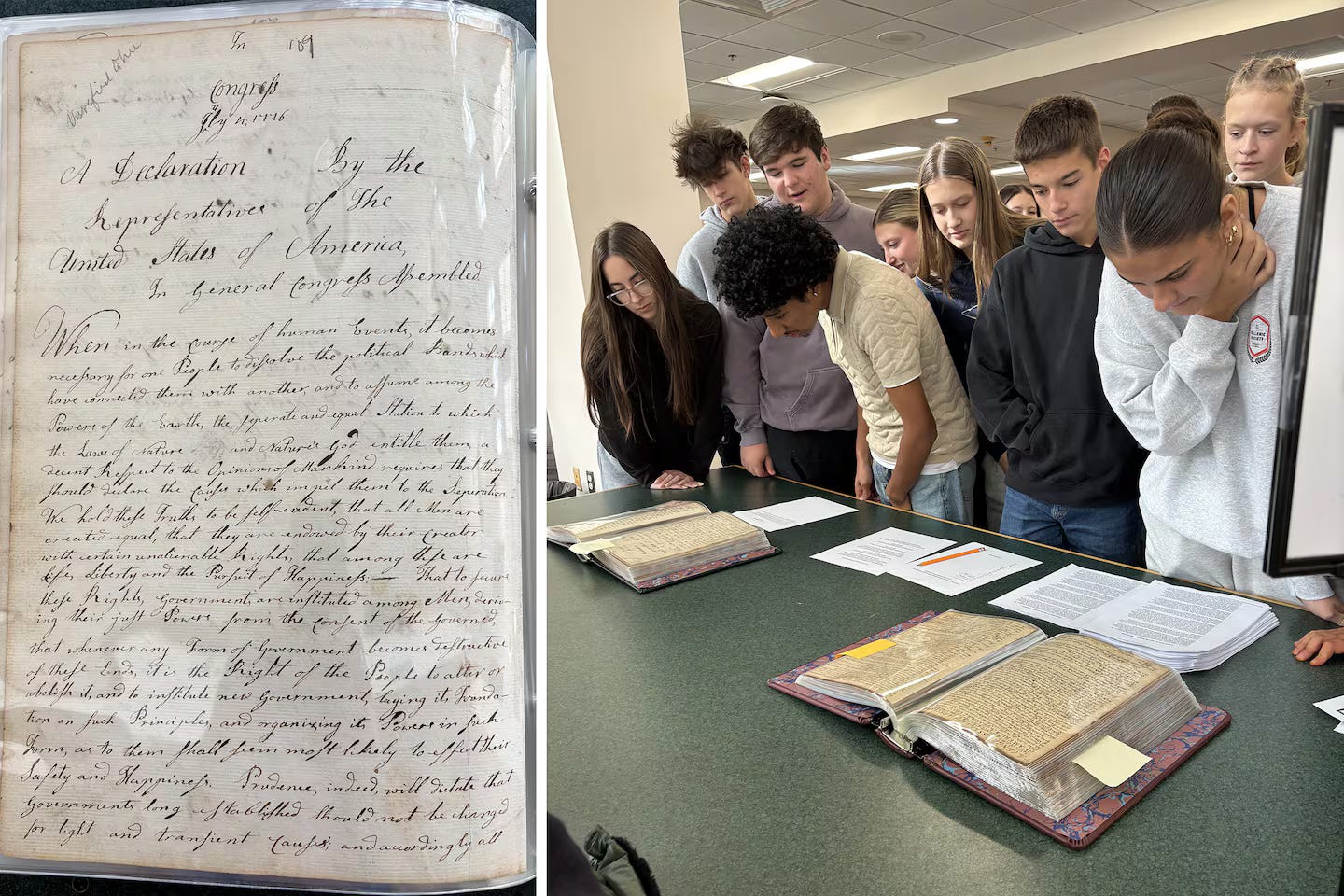
After the Declaration of Independence was signed and ratified on July 4, 1776, it was sent to the printer John Dunlap, who made 200 copies of the document. It was then sent by horse and rider to all incorporated towns. Town leaders were asked to make a copy of the document for their records. With the help from our two town clerks, we were able to bring the Mendon Resolves and our towns’ handwritten copies of the Declaration of Independence, both dated July 17, 1776, to the school library, allowing students to examine them. It was the first time these documents had been together in 249 years!
Examining them side by side, students noticed the nuances of the handwriting and a unique additional paragraph at the bottom of the Upton copy explaining its presence in the records. They even deduced that the Mendon copy was likely penned by Joseph Dorr Jr. himself, noting it matched the handwriting of the Resolves appearing earlier in the records.
Then we handed the history storytelling to the students. Students created documentaries about historic locations in the two towns. Students who struggled with traditional essays shined as cinematographers and editors. Detail-oriented researchers were able to document a crumbling powder tower once used to house ammunition and weapons for the Continental Army at the Battle of Bunker Hill. The students who wrote the scripts used diaries and other primary source documents as well as information from the local historical society to create a vivid portrait of the roles Mendon’s Ammidon Tavern (now known as the Ammidon Inn) played as a shelter for war refugees, a prison for captured British soldiers, and a way station for spy Nathan Hale. And as an added benefit, these projects provided a chance for students to look up from their screens and pay attention to the spaces around them.
Researching and creating these historical narratives prepares students to be better citizens. I’ll never forget what a student told me while driving back from filming at the tavern: “I’m really glad we are doing this. I thought I lived in a ‘nothing’ town. It’s nice to know we actually did something during the Revolution.”
- Darcy Daniels, 2024 History Teacher of the Year, Nipmuc Regional High School
What surprised you about the American Revolution?
It was controversial
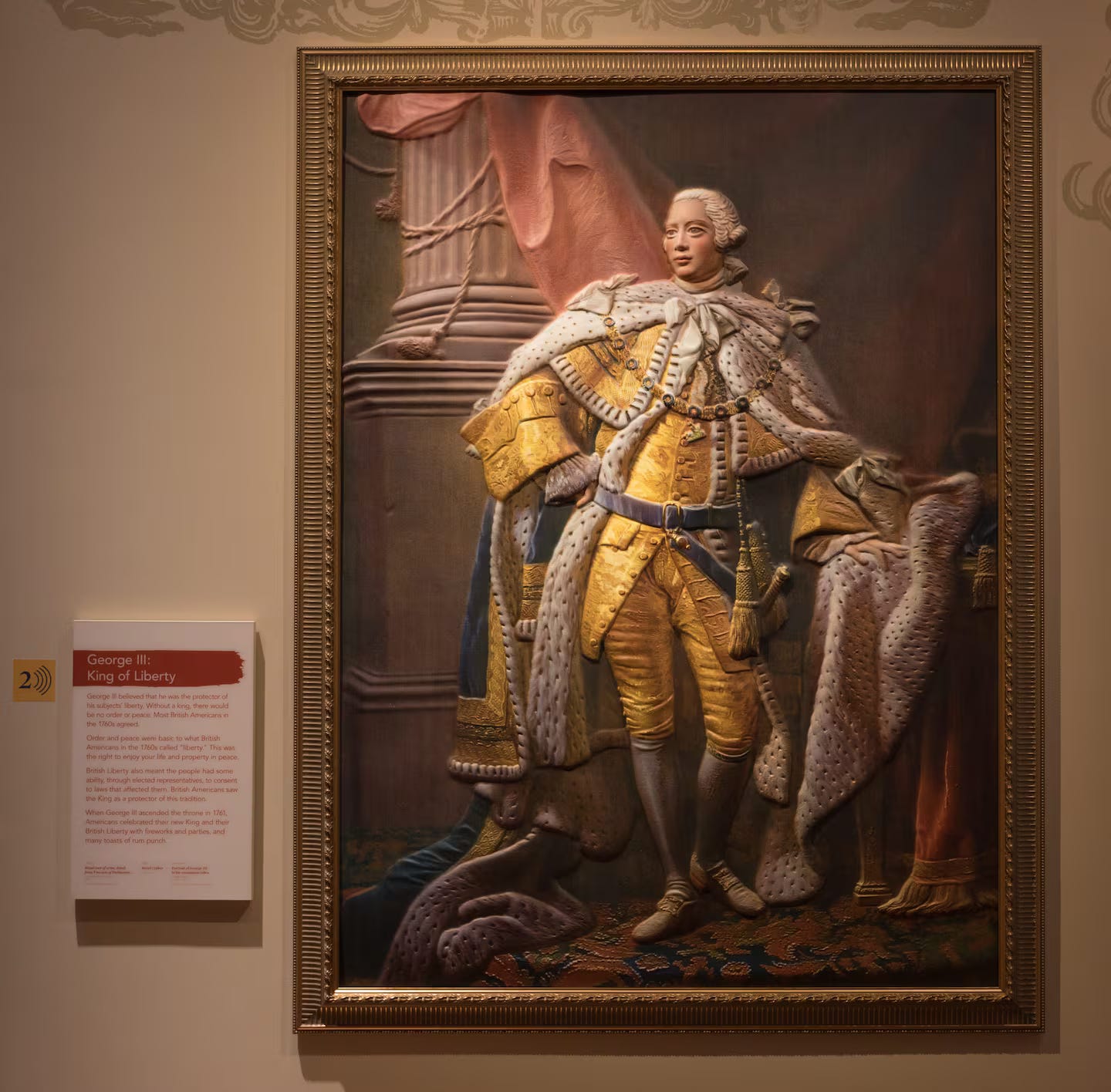
Many people didn’t actually want independence at first. Early in the conflict, quite a few colonists were still very loyal to King George III and hoped that their problems with Britain would eventually boil down without breaking away.
- Talia Murga, 10th Grade, Framingham High School
Both sides promised freedom
The most surprising thing I learned is that a lot of slaves joined the British because the British promised to set them free as long as the slaves fought on their side.
- Wesley Yazel, 8th Grade, Provincetown IB Schools
Small towns, big contributions
The most surprising thing that I learned about the Revolutionary War was the impact even the smallest towns had. In 1775 when residents of Concord heard the British were coming, they moved the supplies that they were hiding to the surrounding towns, including Mendon. The munitions they stored included gunpowder, cannonballs, and rifles, all things that were crucial to the fight.
The munitions were used when the militias marched to Boston where the British held control.
One man that stood out to me in my research was Captain Gershom Nelson, who led four companies of Mendon’s Minutemen to Roxbury in pursuit of the British on April 19, 1775. Later, our Minutemen marched to Boston to fight in the Battle of Bunker Hill. The grit that the untrained regular people had to march into battle with the professional army of the British is a testament to the strength of the American people.
- Matthew Joseph, 10th Grade, Nipmuc Regional High School
Ideas can come from anywhere
Mendon’s actions were not limited to just physically supporting the rebellion with men and materiel. The ideas Mendon’s leaders wrote about had wide-reaching effects that even shaped the Constitution. The Mendon Resolves were written before the Revolution started. The declarations that “all men have naturally an equal right to life, liberty, and property” and “that all just and lawful government must necessarily originate in the free consent of the people” are reflected in our Constitution today. They then ensured the Resolves would be “entered into the Town Book” so that their “children in years to come, may know the sentiments of their fathers in regard to their invaluable rights and liberties.”
I’ve learned to view not just Mendon, but all small towns, differently. No matter how small they seem, these towns’ individual stories and efforts reflect the ideals that founded the United States.
- Giacomo Grisanti, 10th Grade, Nipmuc Regional High School
A surprising hero
Henry Knox was just 9 years old when his father left his family and moved to the Caribbean, forcing the younger Knox to drop out of school and become an apprentice for a firm of booksellers. He read all types of books written by great men, including military histories, and he enlisted in the rebel army after the Battles of Lexington and Concord. Knox directed the American artillery at the Battle of Bunker Hill.
When Ethan Allen and the Green Mountain Boys captured Fort Ticonderoga, George Washington knew who to call on for help.
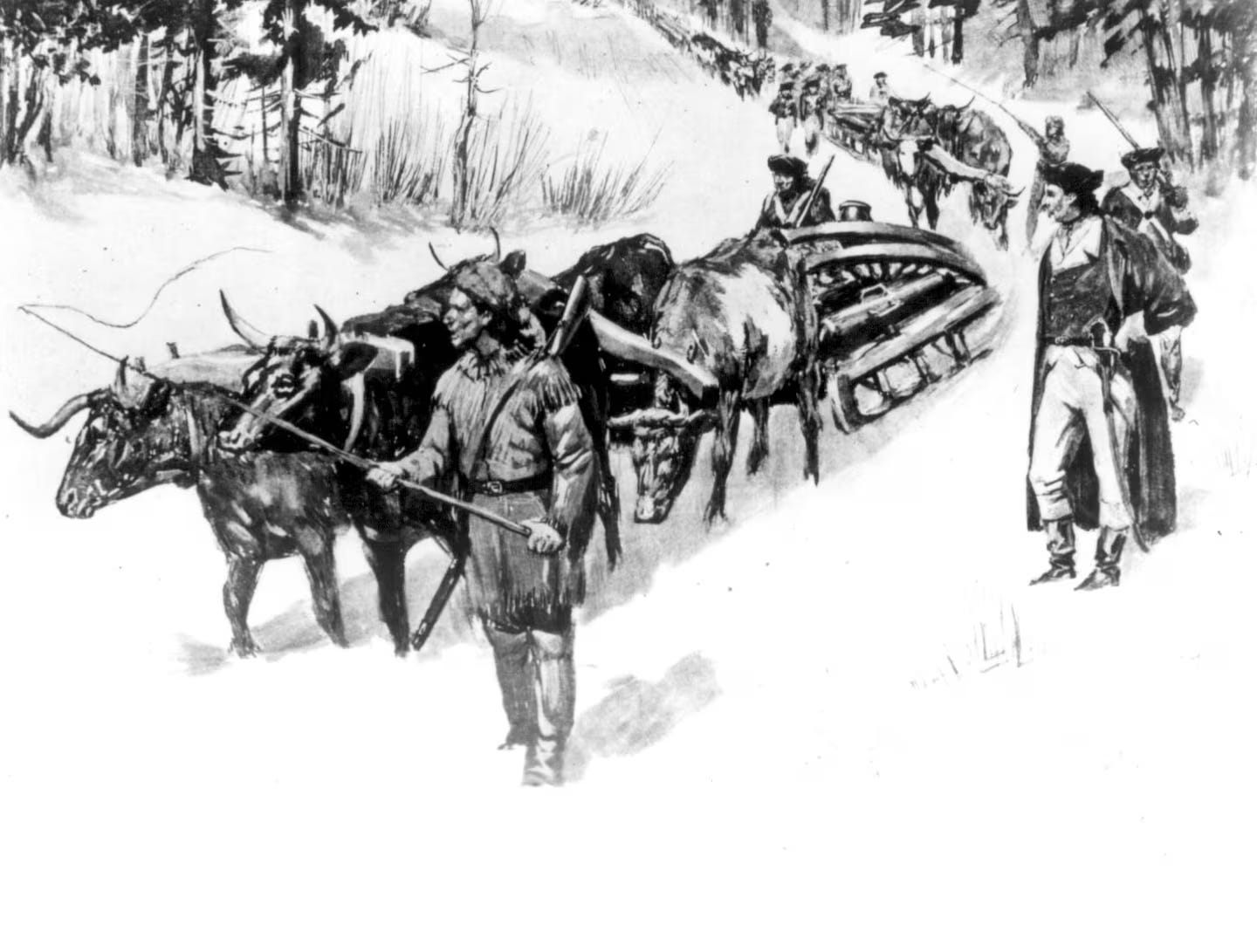
He asked Knox to do one of the most surprising feats of the American Revolution: move 60 tons of cannons 300 miles, from Fort Ticonderoga all the way to Boston. He rounded up oxen and men to haul all of the equipment over frozen rivers, the Berkshire mountains, and the rest of Massachusetts; my father and I drove some of the same route over February vacation. Knox said afterwards “I have almost seen all the kingdoms of the Earth.” Knox made it to Boston and helped Washington and the Continental Army deliver the first major victory of the war in Boston.
- Nolan Mias, Grade 7, Mater Dolorosa School, Holyoke
Teaching the Revolution
Why the basics matter
When I first started teaching American history, I was directed to study the historian Howard Zinn‘s works. He sought to illuminate the lived experiences of Americans in contrast with traditional celebrations of famous and influential political leaders. But I found that my students often had a poor understanding of the traditional American narrative in the first place.
Many students could not name the founding documents, identify key presidents, or describe important events such as early colonization or the American Civil War. Some students had deep knowledge of the histories of other nations or periods, but few knew much about early American history.
Over the years, I’ve collected a wide range of texts for students including primary, secondary, and tertiary sources, artworks, charts and graphs, and more. While primary source documents tend to be the most difficult for students to understand, they are also the most engaging. Reading both the Constitution and the private letters of the people who helped write it help students get a deeper sense of history.
The Declaration of Independence not only lists the specific grievances colonists had with the king and Parliament. Its sharp rhetoric helps students understand the political motives of the Founders. And its language echoes in later events; seeing those words and phrases again and again helps my students recognize the world the Revolution made.
But I haven’t forgotten Howard Zinn. I come back again and again to the stories of the Wampanoags, whose perspectives on the early colonists in New England help students see indigenous Americans as strategic and thoughtful rather than just victims of European colonization and American westward expansion. In different years we’ve also included Jason Reynolds’ and Ibram X. Kendi’s “Stamped” as a text to help students more deeply consider the way ideas such as “race” develop over time and influence periods such as the Revolution.
Every day, I am challenged to reflect on both what my students need and my own understanding of our history. The process is endlessly fascinating and rewarding.
- Michael Houle, Humanities Grade 10 teacher, Codman Academy, Dorchester
The origins of the American idea
An important loss
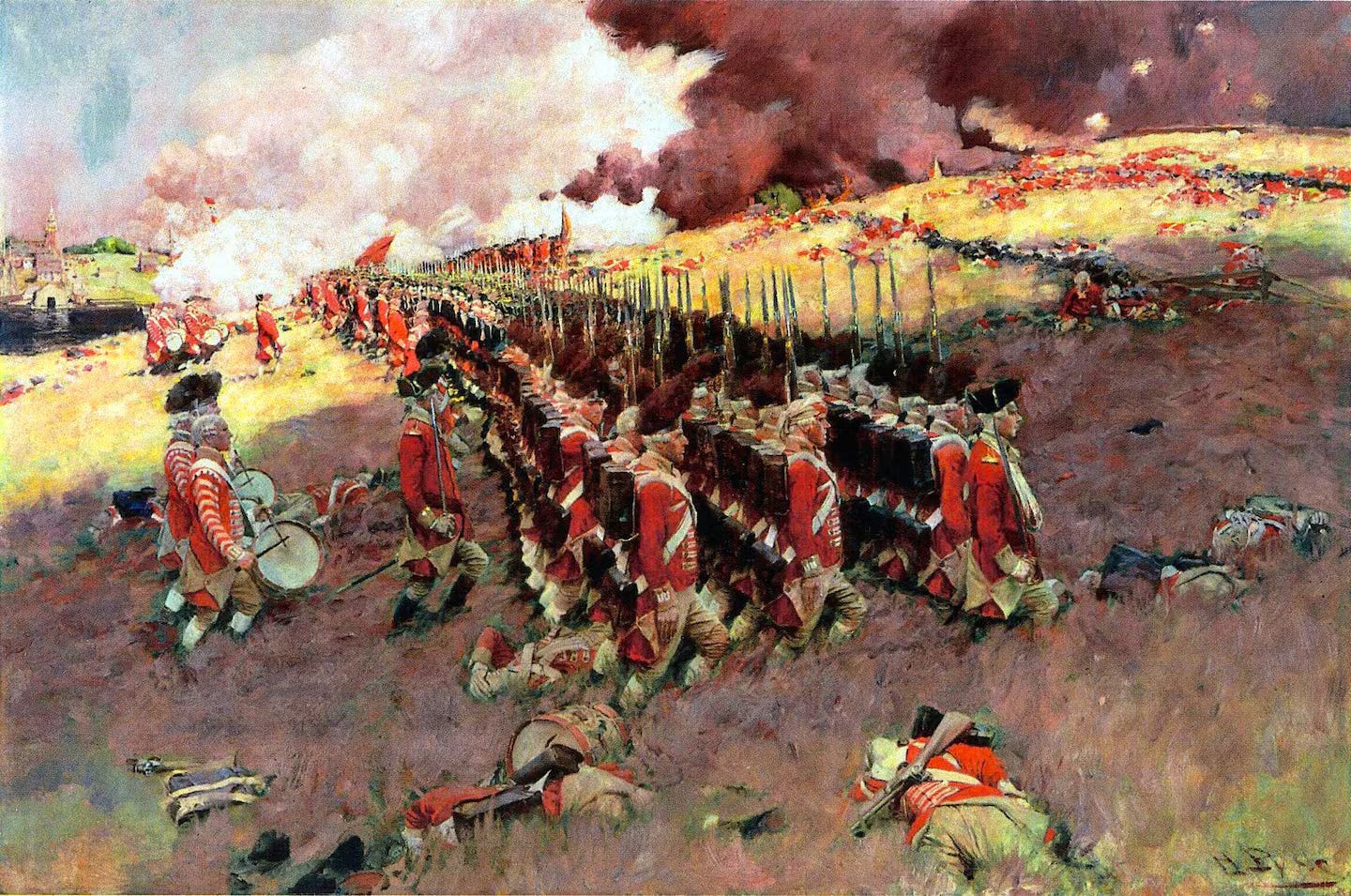
Even though the Americans lost the Battle of Bunker Hill, they built ambition. Losing doesn’t always mean failure. It gives you a place to build from.
- Ella McGlashing, 10th Grade, Framingham High School
A hard winter
The story of Valley Forge helps explain what America later became. During the harsh winter of 1777-78, the Continental Army that was led by George Washington suffered from cold, hunger, and disease but continued to train and stay together. Their perseverance showed how the United States developed a national identity based on resilience and determination in difficult times.
- Talia Murga, 10th Grade, Framingham High School
A complicated man
There is one figure who encapsulated all of the words that come to mind when we think of the American Revolution: defiance, ingenuity, intrigue, leadership, passion, sacrifice, honor, betrayal. That person? The man remembered today only as a traitor, Benedict Arnold.
Arnold was flawed; so were all of our much-heralded Founding Fathers. We can debate which flaws were worse — treason or slave ownership, envy or hypocrisy — but there is no denying that these were imperfect men. Accepting this hard truth allows us to see Arnold’s significant achievements.
His contributions to the Revolution are the stuff of legend. His boldness, aggression, and bravery at Bemis Heights were a huge catalyst leading to the eventual French alliance that would help secure American independence at Yorktown. And his successes throughout the Northern theater of the war contributed to the British refocusing their military efforts on the Southern colonies, where American leaders such as Nathaniel Greene and Francis Marion would eventually help push the British toward the final surrender.
I watched the 250th anniversary of the capture of Fort Ticonderoga pass by with nary a mention of Arnold. I watched the anniversary of his courageous and daunting approach to Quebec pass with the same disappointment. His leadership at Montreal, his ingenuity at Valcour Island, his undaunting courage at Ridgefield, his heroic defiance at Saratoga, and his military prowess at Philadelphia get short shrift, too.
Recognizing Arnold’s achievements forces us to grapple with serious misjudgments by the Continental Congress, which disregarded his heroism, and even by George Washington, who failed in managing his most gifted general. Weighing Arnold’s legacy fairly gives us a chance to see the whole Revolution more clearly.
At the end of his life, Arnold was caught between American disgust and British distrust. As we celebrate 250 years as a nation, we should claim Benedict Arnold as the flawed American hero he truly is.
- Eric Wood, history teacher, Mater Dolorosa School, Holyoke
The Declaration’s limits
The Declaration of Independence is often treated as a sacred text. But “all men are created equal” only sounds revolutionary until you ask who was excluded by that sentence. Enslaved people, women, and Indigenous nations were not forgotten: They were deliberately left out of the category of “men,” and from the equality that was granted to white men.

The Revolution wasn’t just about breaking away from British control; it was about deciding who would be allowed to be a full citizen of the new nation.
In the centuries that followed, groups that were excluded from the Declaration had to argue their way into rights that were never intended for them. The Declaration mattered not just because it called for equality, but because it revealed the gap between America’s ideals and its reality. A gap that became a defining feature of the nation.
- Rana Muntasser, 10th Grade, Lincoln-Sudbury Regional High School
Teaching the Revolution
An ongoing movement
When I first started teaching American history in 2012, I spent a lot of time focusing on major events and people of the American Revolution, especially local events such as the Boston Massacre, the Battle of Lexington and Concord, and the Battle of Bunker Hill. Over the next few years, though, I found myself standing in front of teenagers who wanted to talk about revolutionary movements happening in real time around them: Occupy Wall Street, Black Lives Matter, and #MeToo.
I understood the weight of my position in helping students unpack what felt like revolutionary moments to them (and me), though my ability to teach these moments was not always spectacular. I made mistakes, and students were quick to call me on them.
One such moment came after the 2016 presidential election. I, like many (but not all) of my students, was shocked by the results. I was teaching at an all-girls Catholic school in a more liberal-leaning setting, and the majority of my students felt upset, confused, and even scared. In an attempt to keep my own personal politics out of the classroom, I remember telling my seniors that if they were upset with the election results, they needed to move forward within our democratic society and be agents of activism, maintain hope, learn how history makes us understand the present, and make as much “good trouble” as possible.
It was not the response most were looking for, and dozens of students collectively wrote me a letter expressing their disappointment in my lack of visible reaction to the results.
It was a very hard time for me professionally and personally. I grappled with balancing my own feelings and the ethical responsibility I felt towards all students in my classroom — including those who might have quietly supported the president-elect. Should I have let students sit and cry for 55 minutes while I comforted them? No, and I stand by my decision not to do that. Should I have started teaching World War I that day? No, I shouldn’t have. I learned from that experience and approached elections very differently in 2020 and 2024 by guiding students through a structured lesson that covered the election results and provided space for reflection, questions, and conversation.
What I always came back to then, and what I find myself returning to now, are the foundational ideas of the Revolution. The women and men of the Revolution had beautiful, hopeful, and at times hypocritical visions of what America could be. The idealism of the Revolution, I believe, is still so necessary for us today.
The Declaration of Independence is my favorite document in American history. My love of the Declaration has not changed, but what has is the way I teach it not as part of the past, but as a living document that helps us understand the social contracts that govern our obligations to each other as citizens and the Age of Enlightenment’s ideas that are supposed to inform our lawmakers.
Individual stories and major events still matter in my classroom: Reading excerpts of interviews of enslaved persons and women of the Revolution bring vibrancy to the history and a greater understanding of the Revolution’s limits; asking students to create a declaration about something that matters to them today in the style of the Declaration of Independence brings history to life.
What is the sacred honor of citizens if not to uphold the self-evident truths this nation was built upon? I truly believe that young people today are excited and ready to discuss the nation around them and to take on those timeless responsibilities.
- Jenny Staysniak, 2025 Massachusetts History Teacher of the Year, Lincoln-Sudbury Regional High School
Hope from the revolution
Small sparks
The effect that “Common Sense” by Thomas Paine had gives me the most hope for the future. One man’s writing rallied and inspired so many people.
- Jon Gunn, 8th Grade, Provincetown IB Schools
Welcoming back loyalists
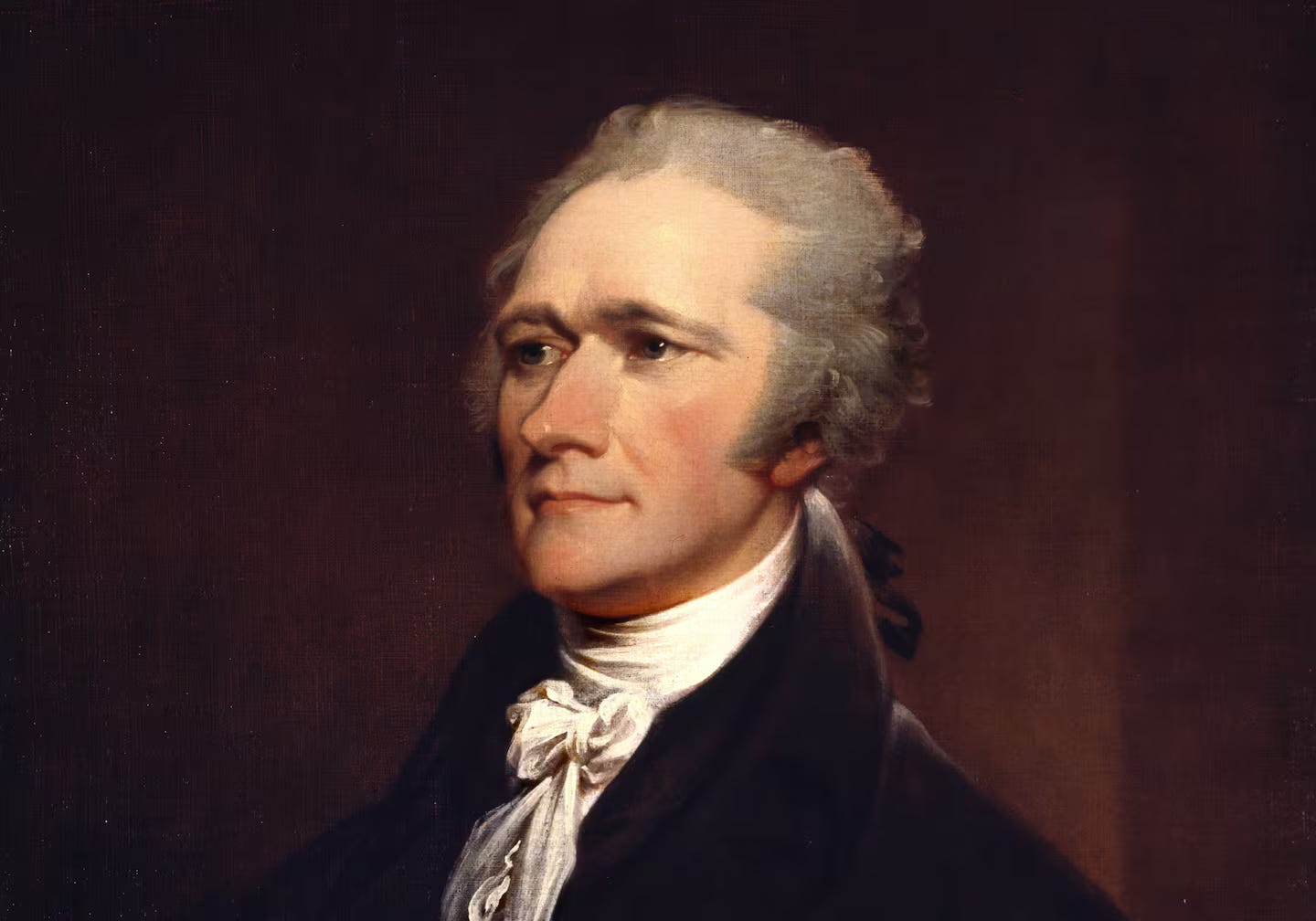
An event that gives me hope for the future took place after the Revolution. I was happy to learn that even after eight years of war, some patriots made efforts to welcome and reintegrate loyalists who fled the 13 colonies during the Revolutionary War and later asked to come home. George Washington hosted a British commissioner, John Anstey, to discuss compensation for loyalists who lost property. Alexander Hamilton wrote “Letters from Phocion, to the considerate citizens of New-York,” arguing it was only just for New York to reintegrate the loyalists who had returned to America.
The wars and disconnection between different groups of people that I see today are almost suffocating. I can only hope that people look at history a little differently and take as an example efforts to welcome loyalists even after the Revolution. Maybe we can realize that there is no point in hating one another when it gets nobody anywhere, and it never has.
- Makaela Jenkins, 8th Grade, the MacDuffie School, Granby, Massachusetts
Pursuing the original promise
As a child of America, I was taught to view the American Revolution with pride. But the 250th anniversary of the signing of the Declaration of Independence reminds me of the failures of our country.
The American government has racially profiled non-English speaking families, mistakenly detained American citizens for alleged violations of immigration law, and instigated violence that killed Alex Pretti and Renée Good for exercising their First Amendment rights.
The Declaration of Independence affirms America’s commitment to progress. In our country’s 250 years, we’ve come a long way. Children of all races have an inalienable right to equal education. No matter their race, sex, or religion, or the identity of the person they love, people have the right to marry. Women have the right to vote, to work, to birth control. Americans are able to lobby for our rights.
But America has so much more potential than what we’re seeing in 2026. I hope that the 250th anniversary of the Declaration will be a wake-up call for Americans: Our country needs to reaffirm our commitment to upholding the promises of our Founding Fathers. We have gone far too long allowing this country to fall short of its original promise.
- Zoe Meltzer, 10th Grade, Lincoln-Sudbury Regional High School
Alyssa Rosenberg is dean of the Allbritton Journalism Institute, a nonprofit dedicated to training the next generation of political journalists.
This article originally appeared on BostonGlobe.com on July 2, 2026.