
Keep politics out of commencement speeches
Universities should protect graduation ceremonies from partisan division.

By Jeffrey S. Flier and John Tomasi
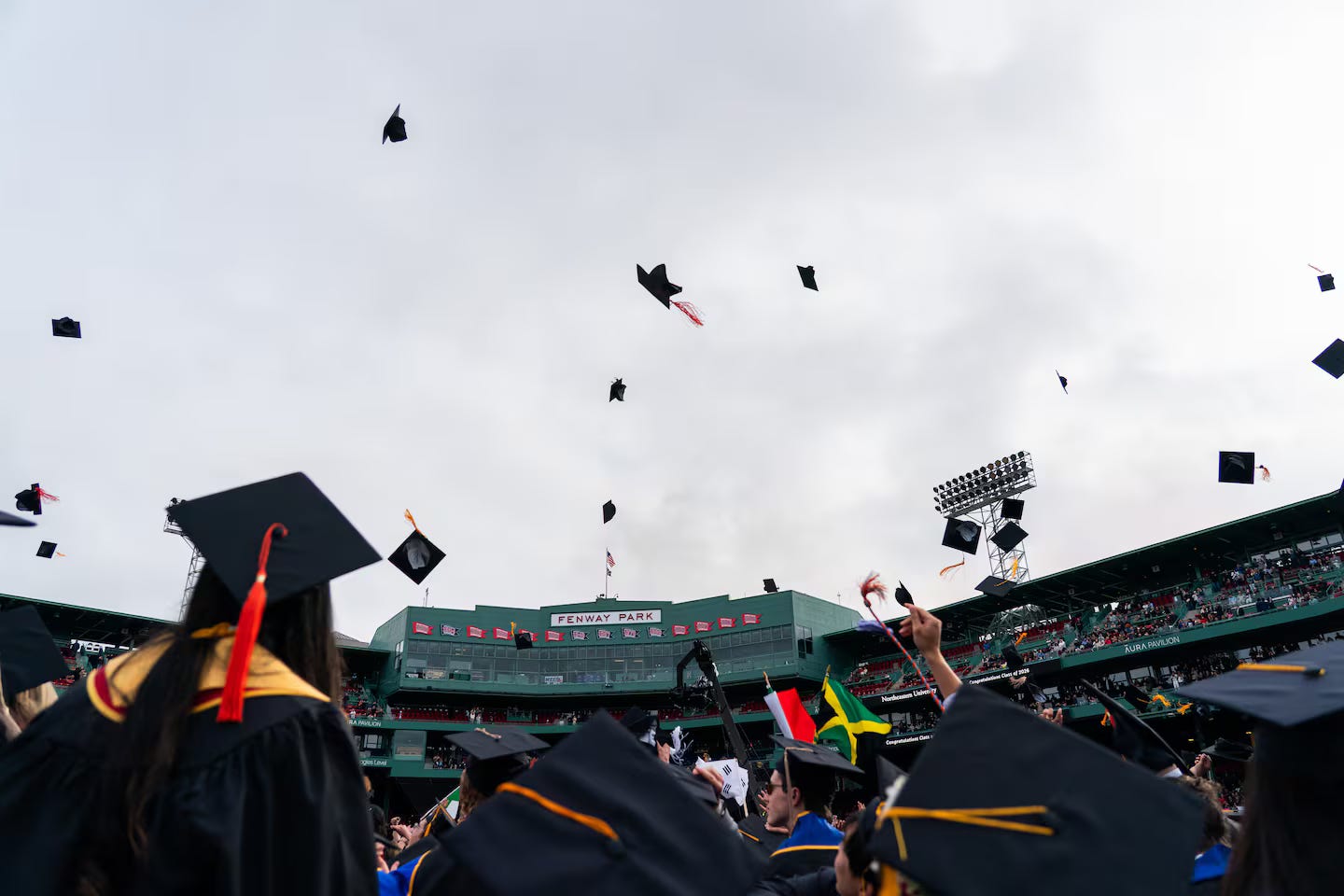
University commencement ceremonies occupy a distinctive place in academic life. At once celebratory, ceremonial, aspirational, and institutional, they mark the culmination of years of study and the transition of students to the next stage of citizenship and professional life. At institutional events — organized, sponsored, and symbolically endorsed by schools and universities — speakers chosen to address graduates at commencements should respect the purpose of these events by not politicizing them.
Honoring this principle is increasingly important at a time when commencement speeches have often become platforms for commentary on divisive issues, partisan advocacy, or ideological signaling. Universities should resist this not because complex or controversial ideas are unwelcome in academic life — far from it.
They should insist on a depoliticized approach because commencement is a unique moment in university life. It is a time to honor the graduates while also celebrating the university as a special type of community, one in which people with diverse perspectives have come together for a period of years, to listen and to learn from their differences in the communal search for knowledge.
At commencement ceremonies, the institution is the host, and invited speakers communicate with the symbolic imprimatur of the institution. When speakers use this platform to advocate their own political preferences — whether on immigration, foreign policy, social justice, or politics — they are not simply expressing their personal views. Intentionally or not, they are attaching their views to the institution and, by extension, to the graduates. Disclaimers that the speaker’s views are solely their own don’t prevent the audience from perceiving the invitation itself as a form of endorsement.
That perception matters. Universities today encompass communities with profoundly diverse political, religious, and moral commitments. Progressives and conservatives, activists and skeptics, students from many countries and cultures, and families holding widely differing beliefs. When a commencement address strongly advances one side of a contested public issue, it transforms a unifying institutional ritual into a polarized political experience.
The graduation speaker is addressing a near-captive audience. For graduates and families, the costs of skipping the ceremony — the walk, the photos, the memories — are real, so almost everyone attends. Leveraging a captive audience to hold forth on contested political or social questions is, at minimum, an inappropriate imposition and, at worst, a painful ambush for members of the community who see the issues differently.
Students receiving diplomas while a speaker condemns their political values, whether progressive or conservative, are justified in objecting. The graduation stage is not an op-ed page, a political blog, or a partisan rally, though some wish to make it one. Norms that apply in those contexts should not be imported into ceremonial settings — think of weddings and funerals, where different norms apply.
This is not an issue of academic freedom or free speech.
Avoiding political advocacy in commencement speeches doesn’t require speakers to abandon their convictions, nor does it silence them in the classroom, the dorm, or on the campus green. Speakers can employ op-ed pages, social media platforms, books, lectures, and countless other venues to express their views. The approach we recommend simply opposes political declarations being imported, unbidden, into a ceremony with a unique nonpolitical purpose. The commencement stage belongs to all the graduates, a diverse community of learners.
What might this approach to commencement speaking look like in practice? Speakers should focus on universal themes: courage, resilience, intellectual curiosity, truth-seeking, integrity, service. Personal experiences can be shared without being weaponized to express contested claims. Graduates should be trusted to form their own views on difficult questions, having sharpened the tools to do so through their studies.
Speakers who stay within the bounds of inspiration, reflection, and craft — elements that have made great commencement addresses timeless — don’t make themselves the story. If the speaker becomes the headline, they have failed in their mission.
Importantly, this doesn’t mean that commencement speeches become boring or pointless. The most memorable were morally serious, beautifully argued, inspiring, and genuinely challenging. In 2005, David Foster Wallace’s address at Kenyon College asked graduates to question the default settings of their own consciousness, and Steve Jobs’s Stanford address, titled “Stay Hungry, Stay Foolish,” used personal stories to address purpose, craft, and courage in the face of mortality.
Universities should adopt a simple norm: Commencement speakers are guests at an institutional ceremony, not partisan advocates seeking to energize supporters. Whether students, faculty, or invited guests, they are speaking to and for the whole university. Their goal should be to inspire graduates across differences, not drive them into ideological camps. In an increasingly fragmented and distrustful society, to preserve a civic and institutional ritual that transcends political division is to advance a public good.
Graduation is, by design, a moment of transition between what was and what will be. Commencement speakers should honor that glorious passage and the special nature of the university — not hijack them in service of political goals.
Jeffrey S. Flier is a professor of medicine and physiology at Harvard Medical School and former dean of the school. John Tomasi is president of Heterodox Academy.
This article originally appeared on BostonGlobe.com on May 14, 2026.
This is spot on. Commencement and Gradauation are times of celebration of accomplishments and not moments to expose politics. There are proper times to be political. Graduation isn't one of them.
I think politics in graduation speeches is a big "it depends." If politics is encouraging students of marginalized backgrounds, yes, politics are okay in speeches. But I don't think people's identities ought to be political. If politics is discouraging ambitions and dismissing the identities of LGBT people, Jewish people, and women, all while trying to sound like an eloquent scribe in a long robe on the street corner, I don't think those politics belong in a commencement speech. Yes, I still get peeved at Harrison Buttface's speech at Benedict University. It was very dispiriting.