
The NBA is in crisis
The league is rich, full of talent — and losing its soul.

By Mike Mariani

There was a line I used to hear a few years back. From the basketball podcasters I listened to, from the broadcasters presiding over live games, in the stories I read about the National Basketball Association: “The league is in a good place.”
At the time, the proclamation largely rang true. The league’s talent was arguably as good as it had ever been. The NBA protagonists of the 2010s — LeBron James, Stephen Curry, Kevin Durant — were gracefully maturing into all-time legends while still competing at the highest level. A new generation of superstars — Giannis Antetokounmpo, Nikola Jokic, Anthony Edwards — were expanding the game’s global reach and the dazzling range of forms superstardom could take. And because the best players were spread generously around the league, it felt like more franchises were relevant — and more fans could realistically expect their teams to make deep playoff runs in any given year.
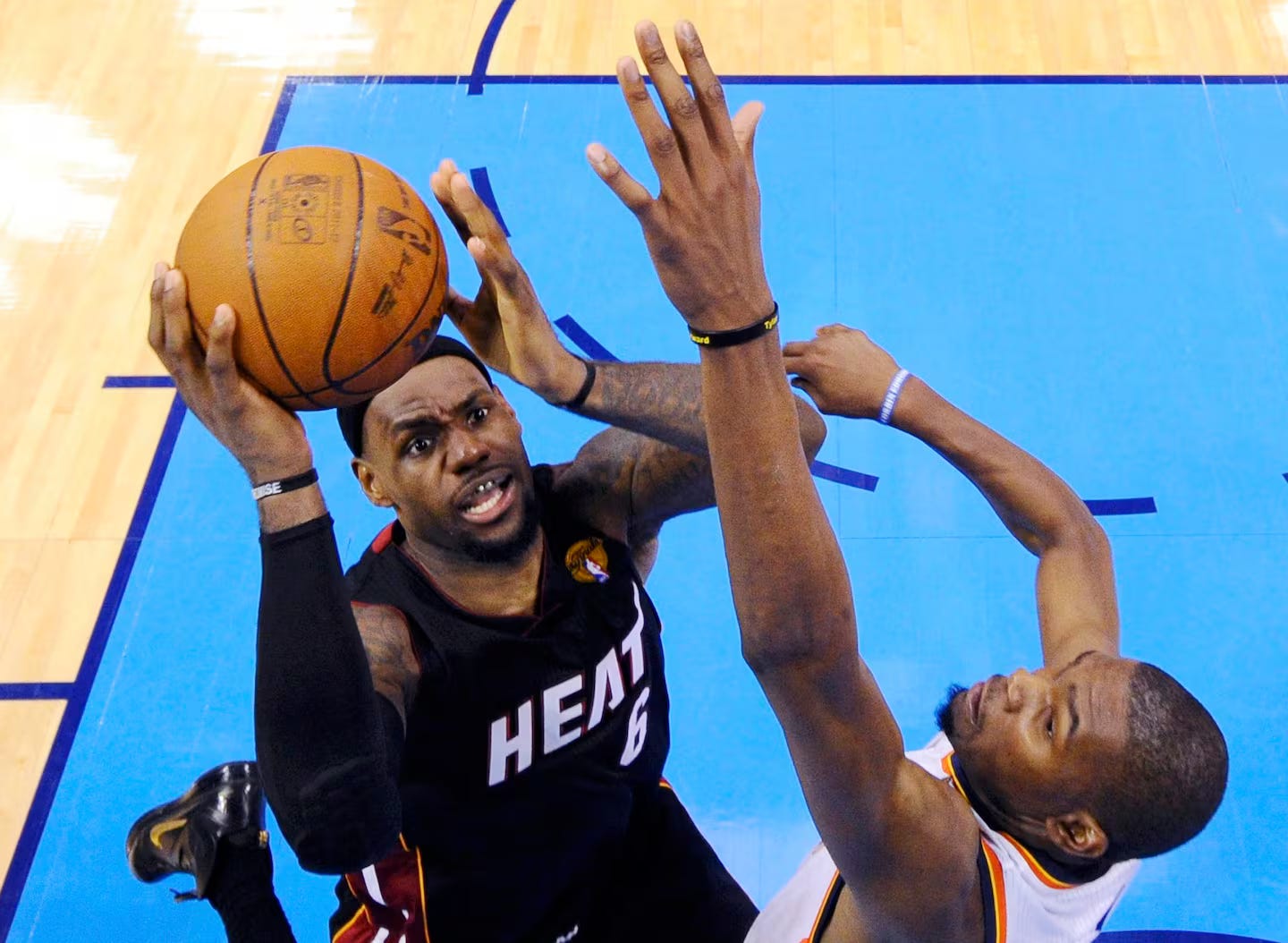
The league also enjoyed an enviable level of cultural cachet. The NBA’s stars and highlights permeated social media in a way that Major League Baseball and even the National Football League — the undisputed king of the American sports scene — struggled to match. Celebrity fans, ferocious dunks, extravagant outfits — they were all part of the show.
Today, there is still a case to be made that the league is healthy. The NBA keeps breaking attendance records. Revenue crossed the $10 billion threshold for the first time in 2022. Two years later, it climbed north of $11 billion. And a new media deal, signed in the summer of 2024 and valued at close to $80 billion, kicked in at the beginning of the current season.
But you don’t hear too many commentators saying the NBA “is in a good place” anymore. Instead, the talk around the league has turned gloomy. And proposals for fixes — some of them quite radical — have begun to swirl. Why? Well, in the last few months, a series of major problems, long simmering beneath the surface, have started rising to a boil.
Losing to win
For years, fans and observers have complained about “tanking” — the NBA’s least competitive teams deliberately losing games in order to secure better positions in the annual draft of college players and other top prospects. But this season teams took the practice to the extreme — throwing in the towel earlier, more often, and in ways that shattered whatever faith remained that every NBA team was actually trying to win on a regular basis.
Perhaps the most egregious example was the Utah Jazz. A franchise in the middle of a multiyear rebuild, the Jazz completed a major deal near the league’s Feb. 5 trade deadline by acquiring Jaren Jackson Jr., a former All-Star and Defensive Player of the Year. Shortly thereafter, though, the Jazz benched Jackson Jr. — along with another star, Lauri Markkanen — in the fourth quarters of two consecutive competitive games.
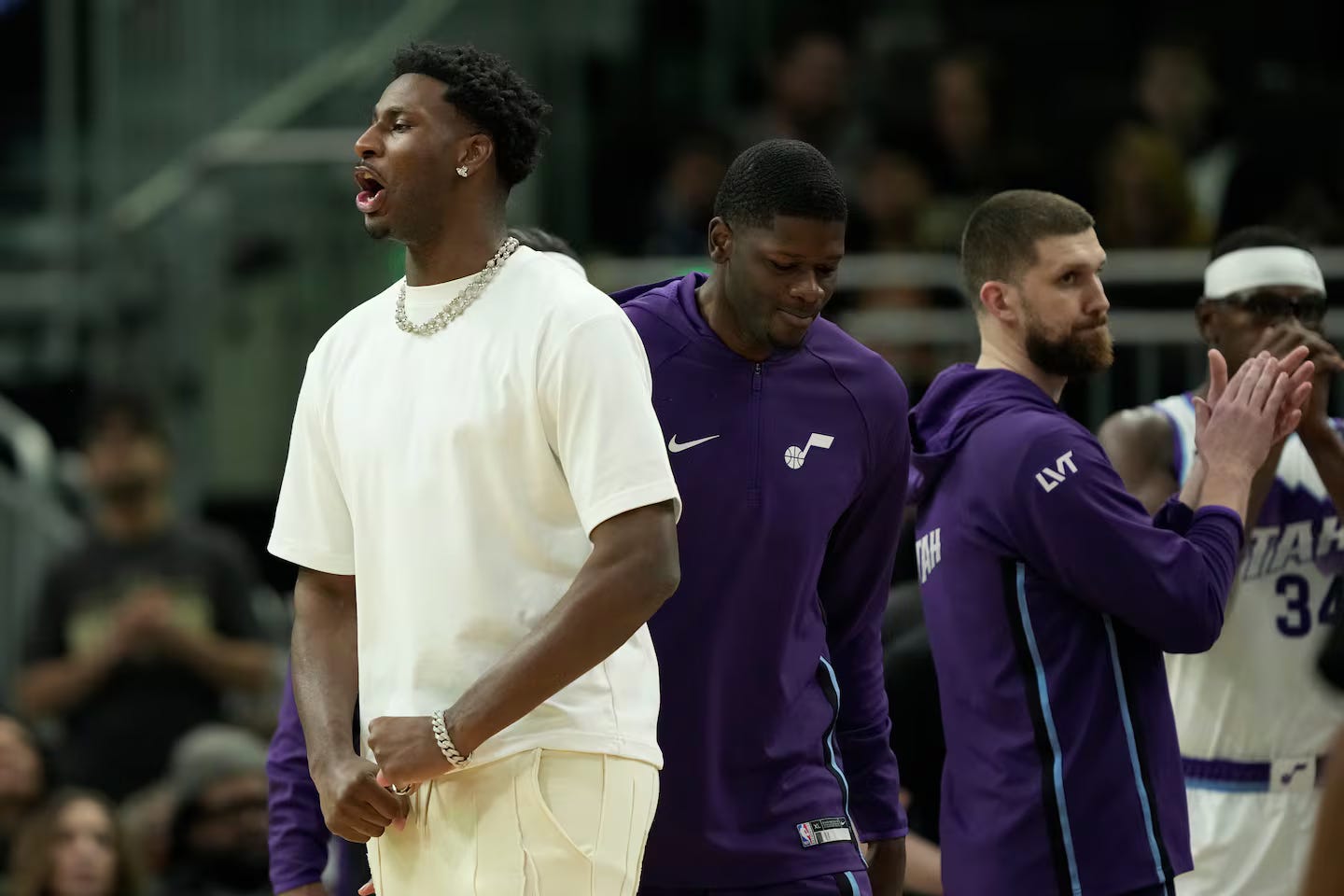
Keeping top players out of a game from the start — claiming they are injured, even if it’s not clear that they are — is one thing. Giving up in the middle of a professional basketball game, in front of fans often paying hundreds and even thousands of dollars to attend, is something else entirely.
While the Jazz only lost one of those two games, their actions appeared to violate an unwritten rule that tanking teams maintain the veneer of competitiveness while steering their seasons into the ground. One ESPN commentator, Bobby Marks, declared that the Jazz were “messing around with the integrity of the NBA,” while another, Stephen A. Smith, called the practice “abhorrent.”

From my perspective, though, what compromised this season more than anything else was a rash of injuries that decimated one NBA roster after another. Many of the league’s best players were sidelined for long stretches, relegated to spectatorship during some of the most meaningful games of the regular season.
A who’s who of the NBA’s best-known players — James, Luka Doncic, Edwards, Jokic, Antetokounmpo, and Curry — were consigned to street clothes in what felt like the single most injury-riddled season since I started watching the NBA in the late 1990s. (According to the statistical website Basketball Reference, the average number of games played by the league’s All-Stars this season was 68, with many of the top players barely eking out 60. In 2003, the average All-Star played in 79 games.)
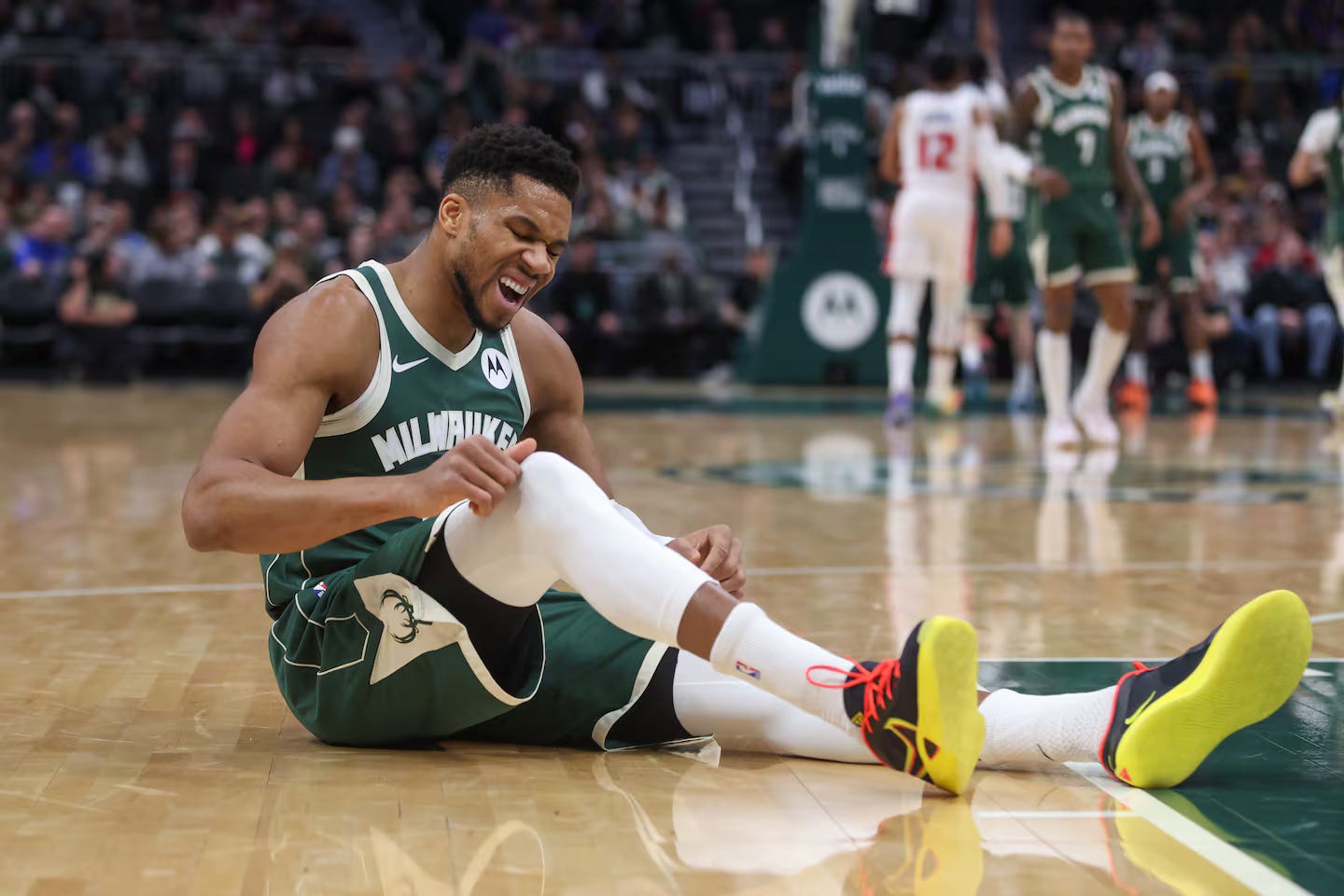
By the second half of the season, the persistent absence of the league’s most celebrated players started to make the product feel diluted, unreliable. Imagine if a third of the time you went to the movie theater, the film projected on the screen had a different cast than the one advertised in the trailers, with the top-billed star replaced with a lesser actor. As The New Yorker’s Louisa Thomas put it in late November, “It is the story of the season so far: on any given night, nearly half the league’s best and most well-known players are sitting on the bench, in street clothes.”
There was some bad luck, of course, in the spate of injuries. But for a growing number of observers, the missed games were evidence of a larger problem: The NBA season is simply too long.
Although the league has had an 82-game season for nearly 60 years, today’s contests are more intense and exhausting than they’ve been in decades (according to ESPN Research, this season’s pace of play is the fastest since 1988). In an effort to gain a competitive advantage, teams are deploying a range of strategies that are relatively new to the NBA: Defenders are pressuring the opposing team’s guards the full length of the court; teams are relentlessly hunting fast break opportunities; and players at all five positions are grappling for offensive rebounds in an effort to create extra possessions for their teams.
While these tactics make the games more kinetic — and often more entertaining — they also wear down players, including younger ones who used to be less prone to injury. Celtics fans know this better than most. In last year’s playoffs, the team’s best player, Jayson Tatum, collapsed to the floor with a ruptured Achilles tendon.
In addition to tanking and player injuries, the NBA is dealing with the fallout of the analytics era in sports. A full appreciation for the value of the 3-pointer — it is, after all, worth 50 percent more than a 2-pointer — has led to a deluge of the long-range shots. Teams attempted an average of 37 3-pointers in the 2025-26 season, more than twice the average attempted in the early 2010s.
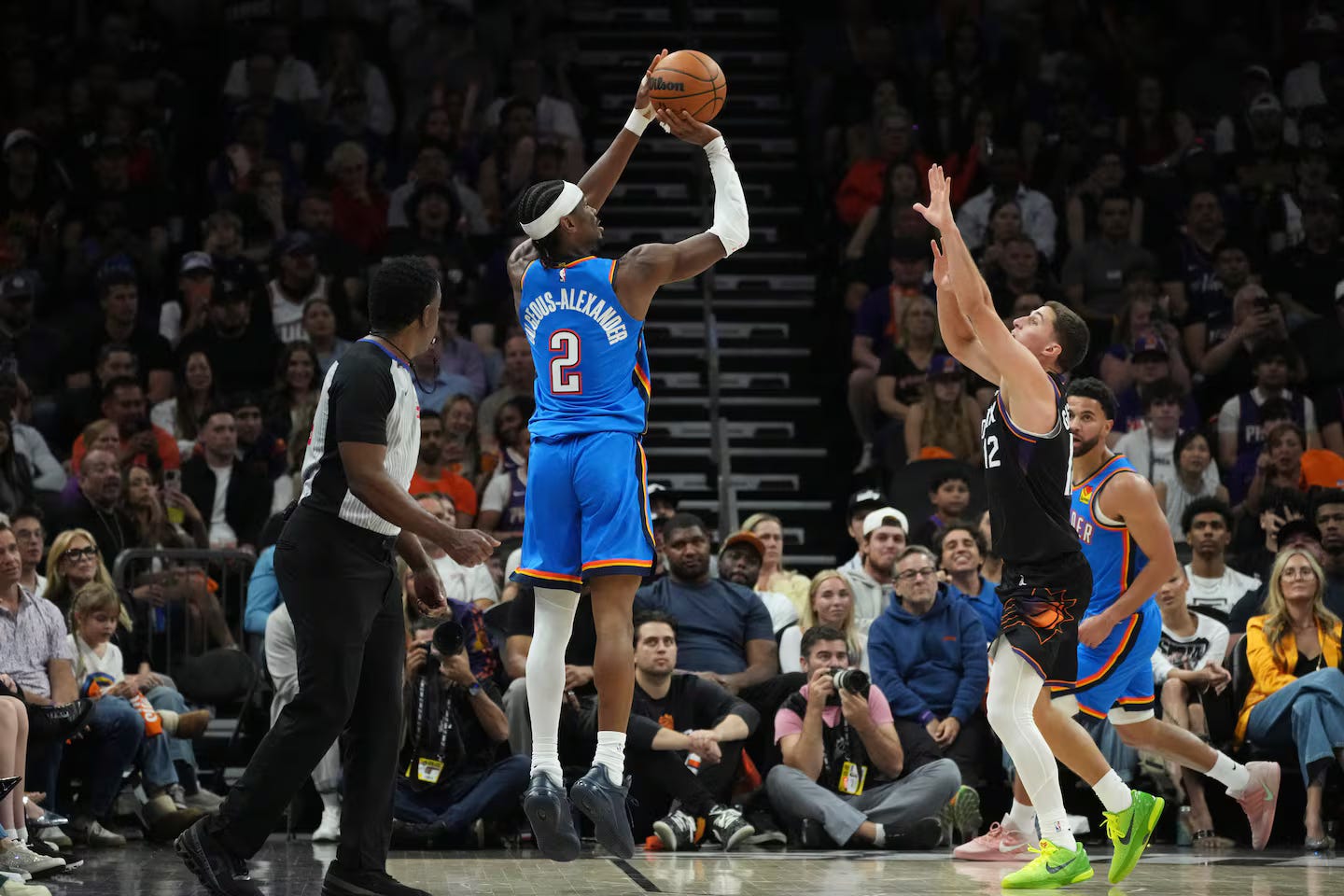
While 3-pointers can be thrilling under the right circumstances, they lose much of their appeal when entire offenses are engineered around taking as many as possible. For some fans, the final straw was the transformation of the fast break, when a handful of players streak down the court after a steal, turnover, or loose ball. Fast breaks used to end ecstatically, with rousing acrobatics and thunderous dunks. When players started quietly planting their feet behind the 3-point line and hoisting the same shot they take in so many other situations, it was a sign that the scheming had gone too far.
The 3-pointer was the answer to every question, it seemed. A stultifying stylistic sameness had settled over the game.
Can the NBA fix its problems?
There are solutions to this crisis of American basketball — or, at least, partial solutions. The question is: Will the league take them up?
The record thus far is mixed.
The first and most obvious fix is to shorten the regular season. Eighty-two games, played at such a grueling pace, lead to too many injuries. And they turn the regular season — especially when nearly a third of the teams are trying to lose — into a slog.
The problem, of course, is that team owners are loath to sacrifice the ticket sales and television contract money that comes with every game.
Teams stand to lose as much as $5 million for every game cut out of the regular season. If the season were reduced to 70 games — an oft-suggested number — that would amount to as much as $60 million in lost revenue for each team and well over $1 billion leaguewide.
It’s not clear that anyone could convince the team owners — who have the final say in rule and format changes — to give up that kind of money. The players, whose salaries depend on the NBA’s revenue, may hesitate to shorten the season, too. As Golden State Warriors head coach Steve Kerr put it during a November press conference, “Everyone, all the constituents, would have to agree to take less revenue. … In 2025, in America, good luck.”
The league seems more serious about addressing tanking.
In an attempt to foster parity, the NBA, like America’s other professional sports leagues, provides the worst teams with the best picks in the next season’s draft of young talent. A new proposal floated by the league’s central office would keep that basic structure in place but would penalize the bottom three teams for their underperformance. In essence, the plan would make it harder for those teams to secure a top pick than the rest of the NBA’s losing franchises. Under another provision of the proposal, no team would be able to win the No. 1 pick in consecutive years. And the league’s central office would have greater authority to punish tanking.
And what about the numbing reliance on 3-pointers? To encourage more diversity in playing styles, some have suggested that the home team should be able to move the 3-point line to a distance of its liking (in a similar spirit to Fenway Park’s Green Monster, which routinely turns would-be home runs into base hits).
It would be a radical change. But the league at this point should be in the business of radical change.
The commissioner
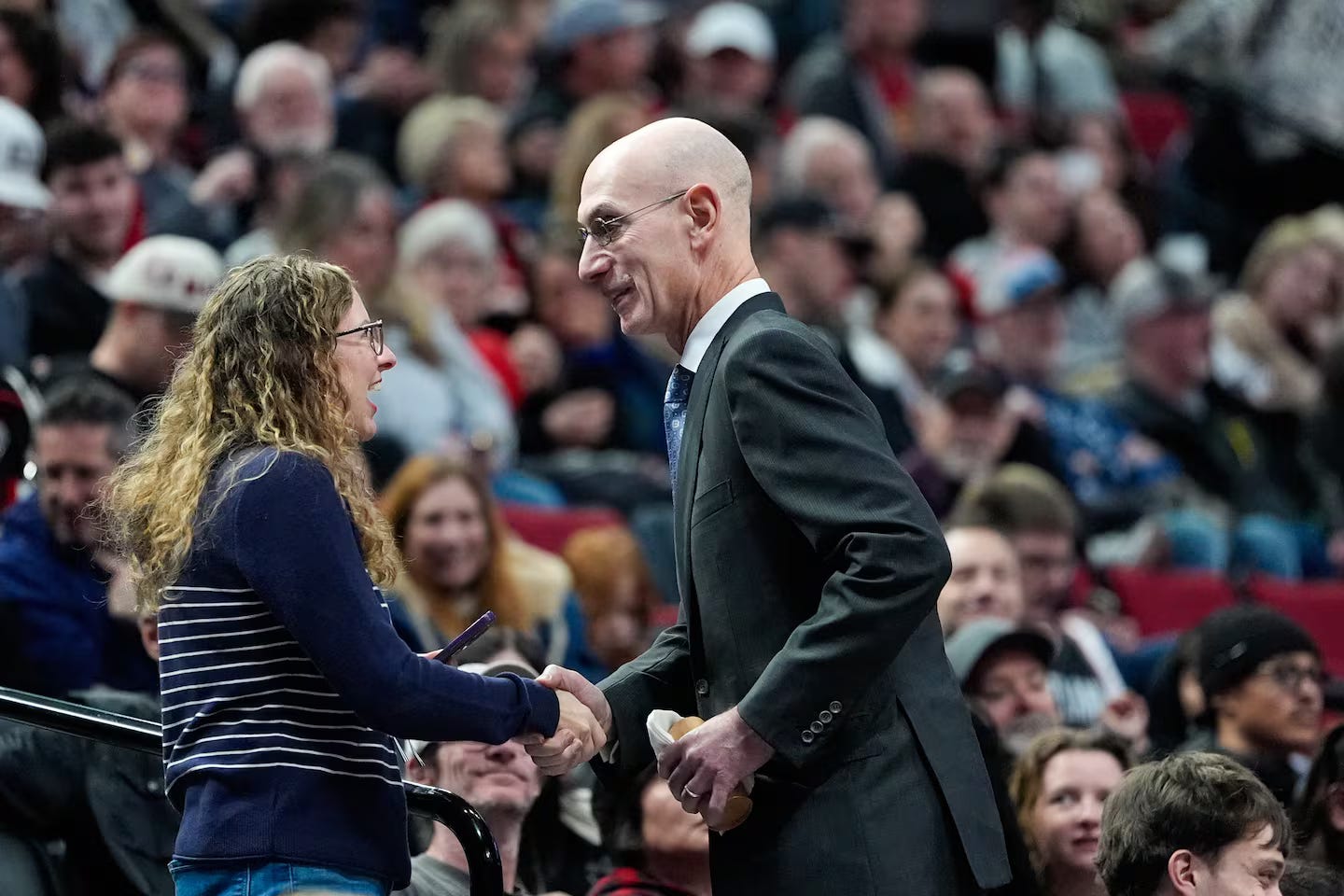
The man charged with fixing a struggling league is NBA commissioner Adam Silver. A longtime league executive, he operated for years under the considerable shadow of former commissioner David Stern.
Stern did an impressive job of growing the league in the 1990s and 2000s, transforming a marginal sport into a global powerhouse. But he was brusque. He could be hard on the players. And with the league riding high in the mid-2010s, his hand started to feel too heavy.
Silver, who took the helm in 2014, has been more restrained. More deferential to the players. For much of his tenure, his focus has been consolidating Stern’s gains. And for a time, that was enough.
Now though, as the NBA finds itself in a growing crisis, his style no longer feels as well calibrated to the league’s needs.
In recent months, he’s faced growing pressure to be more assertive. And he has made some gestures in that direction.
When the Jazz and another team, the Indiana Pacers, engaged in especially flagrant tanking this season, the commissioner levied fines of $500,000 and $100,000, respectively. And after a two-day board of governors meeting in March, Silver sounded unusually resolute when he asserted, in a league statement, that tanking is an issue “that we take very seriously, and we are going to fix it. Full stop.”
Perhaps Silver and the team owners will finally find the plot.
But for now, it seems lost.
That’s especially confounding for a league that has long excelled at telling a good story. The NBA has been defined by its grand narrative arcs, its storylines that positioned great players and teams in the sweep of history — and, sometimes, the bronze of immortality.
There were Michael Jordan’s three-peats — two sets of back-to-back-to-back championships, bookending a brief retirement; a beautiful symmetry that both encompassed and defined an entire decade. There were the dynastic, turn-of-the-millennium Los Angeles Lakers, a team of majesty and palace intrigue. And there was the rise of LeBron James, the hungry prodigy from Akron, Ohio, who aimed to supplant Jordan as the greatest player of all time.
In 2026, such lofty narratives are increasingly overshadowed by the league’s deficiencies and the tepid responses to them. Instead of coalescing around archetypal stories and the crystallization of legends, the discourse around the NBA today is fractured and fickle, lacking any arcs that could etch themselves into history.
And while Silver and league officials may be quick to rhapsodize about the virtues of today’s NBA, the league is not particularly close to what it was 20 years ago — back when All-Stars played 80 games, and James and Durant were storming a league ruled by Kobe Bryant, Shaquille O’Neal, and Tim Duncan. Back when narratives were situated on the 94 feet of hardwood between one basket and the other — rather than the benches, medical facilities, and draft rooms that inspire much of today’s NBA discourse. Back when the focus was on the grandeur of the game.
Mike Mariani is a writer whose work has appeared in The New Yorker, The Atlantic, and Vanity Fair, among other publications. He is the author of “What Doesn’t Kill Us Makes Us.”
This article originally appeared on BostonGlobe.com on May 18, 2026.